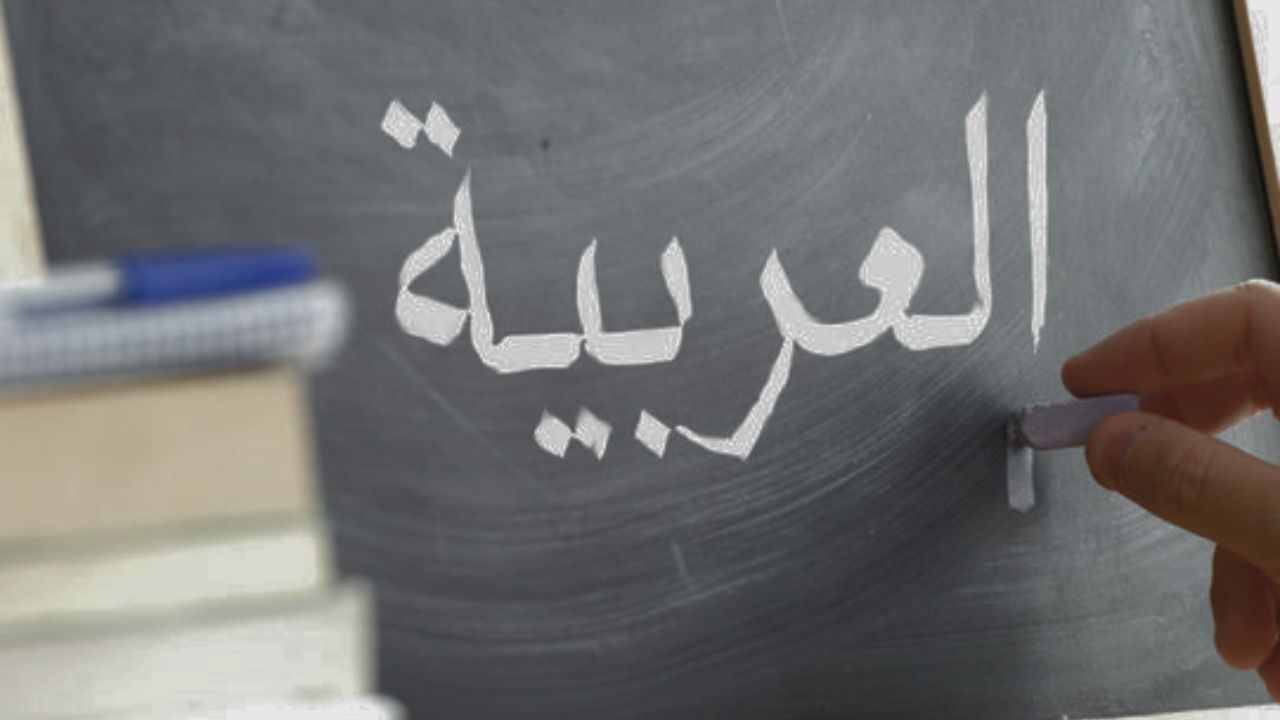
A common assumption among families moving to the UAE is that Arabic is something Indian curriculum schools offer if they choose to. It is not. Arabic is a national requirement, it applies to every private school in Abu Dhabi regardless of curriculum, and it is assessed like any other subject.
Once parents understand that, the more useful questions follow quickly. Which version of Arabic will my child study, who decides, and what can I do at home when I do not speak a word of it?
This distinction causes more confusion than anything else in the subject, and it is simple once explained.
Arabic A is Arabic as a first language. It is for students from Arab families and is taught at native speaker level, covering literature, grammar and composition.
Arabic B is Arabic as an additional language. It is for students from non-Arab families and starts from the alphabet, building towards practical reading, writing and conversation.
Placement follows nationality and family background rather than current ability. A child from a non-Arab family who happens to speak good Arabic still sits in Arabic B. That occasionally frustrates a strong student, and it is worth raising with the school, because a good department will find ways to stretch them inside the group.
Read more: The CBSE Curriculum in Abu Dhabi
The published subject lists make the pattern clear.
| Stage | Arabic | Islamic Education | Moral, Social and Cultural Studies |
|---|---|---|---|
| Grades 1 to 5 | Arabic | Islamic Studies, with General Knowledge for non-Islamic students | Yes |
| Grades 6 to 8 | Arabic | Islamic Studies, with General Knowledge for non-Islamic students | Yes |
| Grades 9 and 10 | CBSE Arabic among the optional languages, with Ministry Arabic optional in Grade 10 | Islamic Studies, with General Knowledge for non-Islamic students | Yes |
Two details in that table matter.
At Grades 9 and 10, Arabic appears in two forms. CBSE Arabic sits within the board's optional language list alongside Hindi and French. Ministry Arabic is the national curriculum version and is optional in Grade 10. Families should ask which route suits their child, because they are not interchangeable.
General Knowledge replaces Islamic Studies for non-Muslim students. It is a substitution rather than a free period.
The full grade-wise lists are published on the Subjects and Streams page.
Parents frequently assume it is. It is not.
The subject brings together social studies and moral education into one programme. It covers the geography and history of the Emirates, how UAE society and government work, and a set of universal values including honesty, tolerance, respect and responsibility towards a community.
In practice, this is the subject through which a child growing up in Abu Dhabi learns about the country they actually live in. Families who have been here a decade often find their children know more about Emirati history and civic life than they do, which is generally a pleasant discovery.
The national picture changed recently. A requirement for daily Arabic in kindergarten across all private schools took effect in the 2025-26 academic year, with the weekly minimum rising over the following years. Islamic Education is also required for Muslim children at this stage.
At this age none of it is formal. Arabic in a kindergarten room arrives through songs, repetition, stories and games, in the same way everything else does. Children absorb it quickly and rarely notice they are learning a language.
It is easy to treat Arabic as a box the school ticks. Three reasons not to.
It is assessed and it appears on the report card. Arabic marks count. A child who falls behind quietly in Grade 3 can find it a genuine problem by Grade 8, because the subject builds on itself.
Schools are inspected on it. Regulators look closely at the quality of Arabic and Islamic Education teaching. How seriously a school takes these subjects is a reasonable proxy for how seriously it takes its obligations generally.
It is useful. A child who can read a sign, greet a neighbour or follow part of a conversation has a different relationship with the country they are growing up in. That holds regardless of how long a family stays.
Most parents reading this cannot help with the homework. That is fine, and it is not the useful contribution anyway.
Work on the script first. For younger children the real barrier is letter recognition, because Arabic letters change shape depending on where they sit in a word. Fifteen minutes of alphabet practice a few times a week does more than an hour of vocabulary drilling.
Read the city. Road signs, lift buttons, shop fronts and food packaging are all in Arabic. Asking a child to read one sign on the drive to school costs nothing and works surprisingly well.
Let them teach you. A child explaining something remembers it better, and a child correcting a parent's pronunciation is a child paying attention.
Ask for the term's word list. Most Arabic teachers will share it happily. Ten familiar words practised at home beat fifty unfamiliar ones.
Resist translating everything. Children learning a second language need to tolerate not understanding every word. Rushing to translate slows that tolerance down.
Speak to the teacher early. If something is going wrong, the Arabic teacher can tell you whether it is the script, the vocabulary or simply confidence, and those need different responses.
1. Is Arabic compulsory in Abu Dhabi private schools?
Yes, for all students, whatever curriculum the school follows.
2. What is the difference between Arabic A and Arabic B?
Arabic A is for students from Arab families and is taught as a first language. Arabic B is for students from non-Arab families and is taught as an additional language.
3. Does my non-Muslim child study Islamic Education?
No. General Knowledge is offered in its place, and Moral, Social and Cultural Studies is taken by all students.
4. Is Moral Education a religious subject?
No. It covers UAE society, geography and civic life alongside universal values such as honesty and respect.
5. What is the difference between CBSE Arabic and Ministry Arabic?
CBSE Arabic sits within the board's optional language list. Ministry Arabic follows the national curriculum and is optional in Grade 10. Ask the school which suits your child.
6. My child is joining mid-year with no Arabic at all. What happens?
Tell the school before the first day. This is common and schools plan for it, but the support works better when it starts in week one.
7. Do Arabic marks affect the overall result?
Yes. Arabic is assessed and reported like any other subject.
It is the subject parents raise last, usually at the end of a tour when everything else has been covered. Raise it first instead. You will learn more about a school from how it answers that question than from almost anything else.
If your child is joining us from a school where Arabic was not taught, or was taught badly, tell the admissions team at the point of application rather than in October. We would far rather plan the support than discover the gap.
Call +971 2 692 2000, or read the grade-wise subject lists on our Subjects and Streams page before you visit.
Written by Bright Riders School Abu Dhabi.